
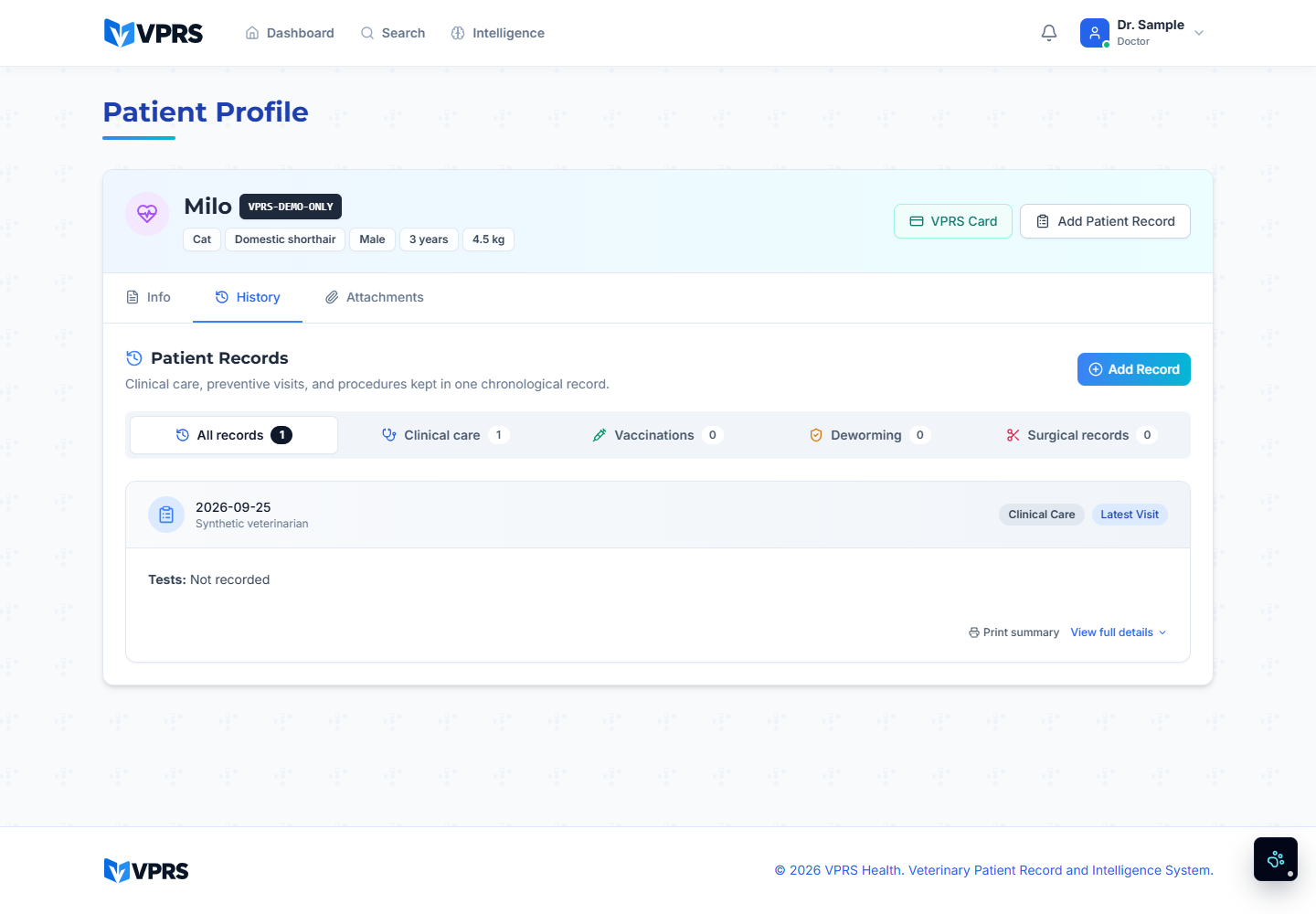
A complete, organised history for every patient.
One patient. One lifelong record. A more intelligent standard of veterinary care.
VPRS, the Veterinary Patient Record and Intelligence System, connects veterinary clinical records, permanent patient identity, Clinical AI, and practice intelligence.
A complete, organised history for every patient.
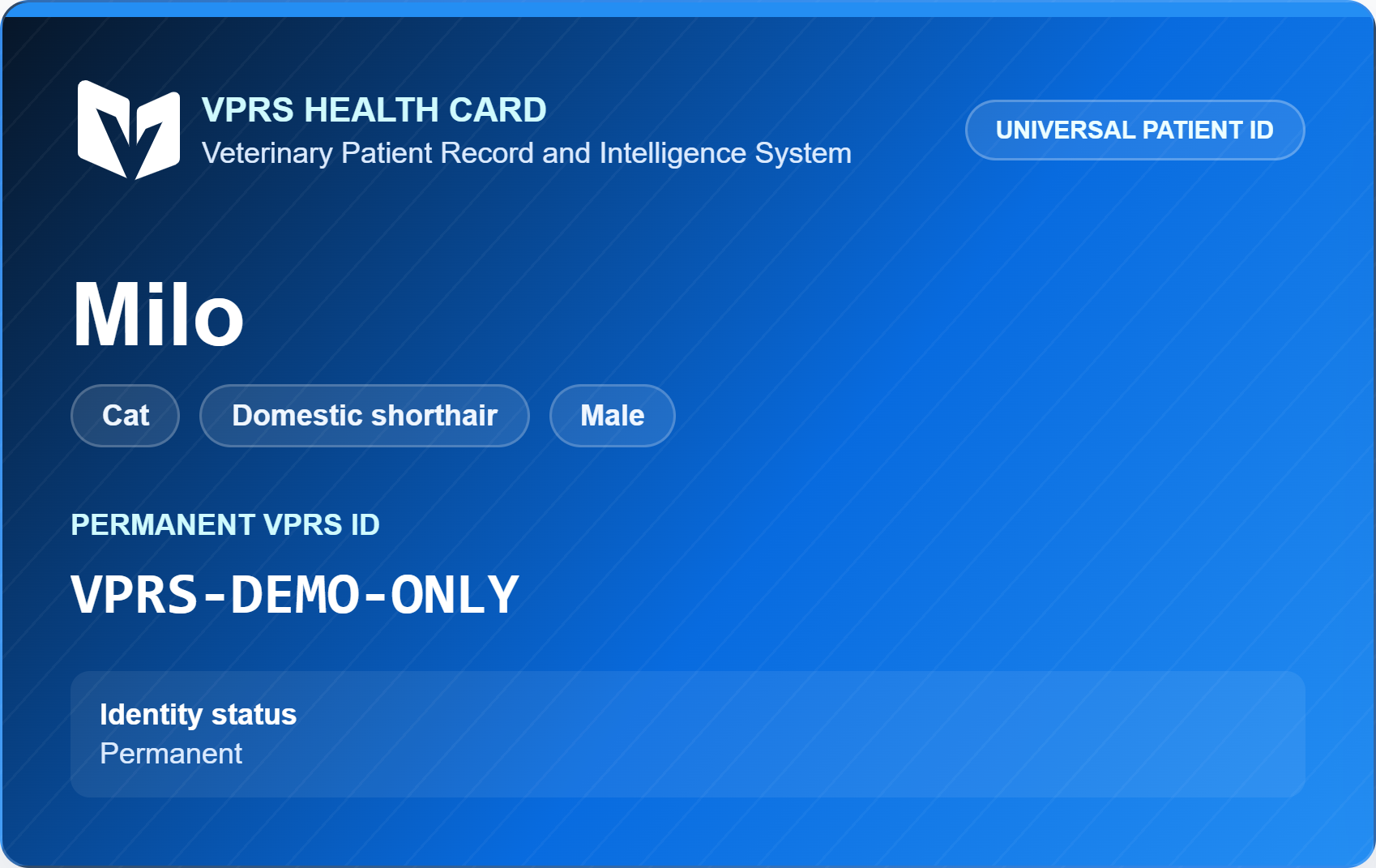
One VPRS identity that stays with the patient.
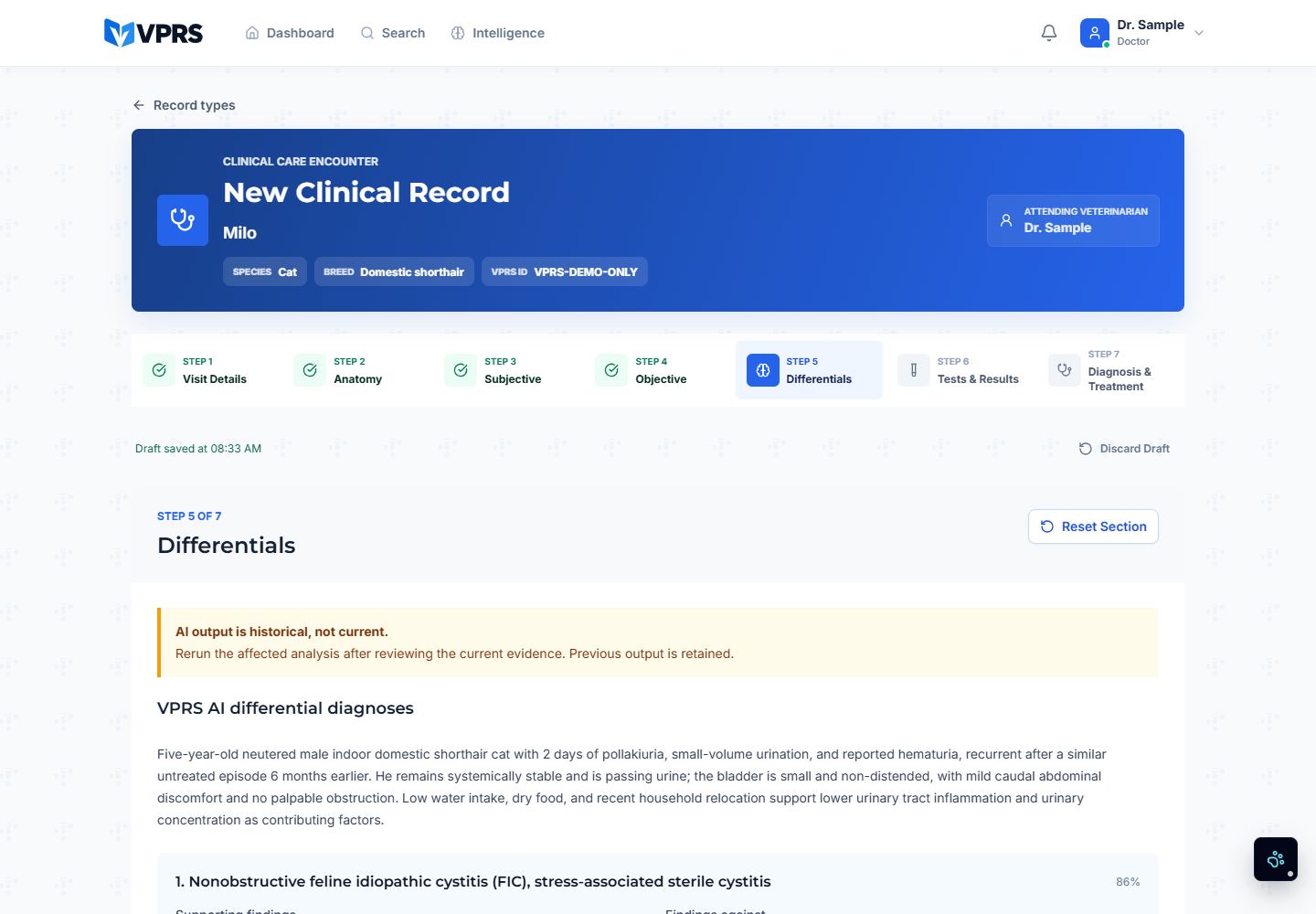
Differentials, tests, result review, and treatment guidance.
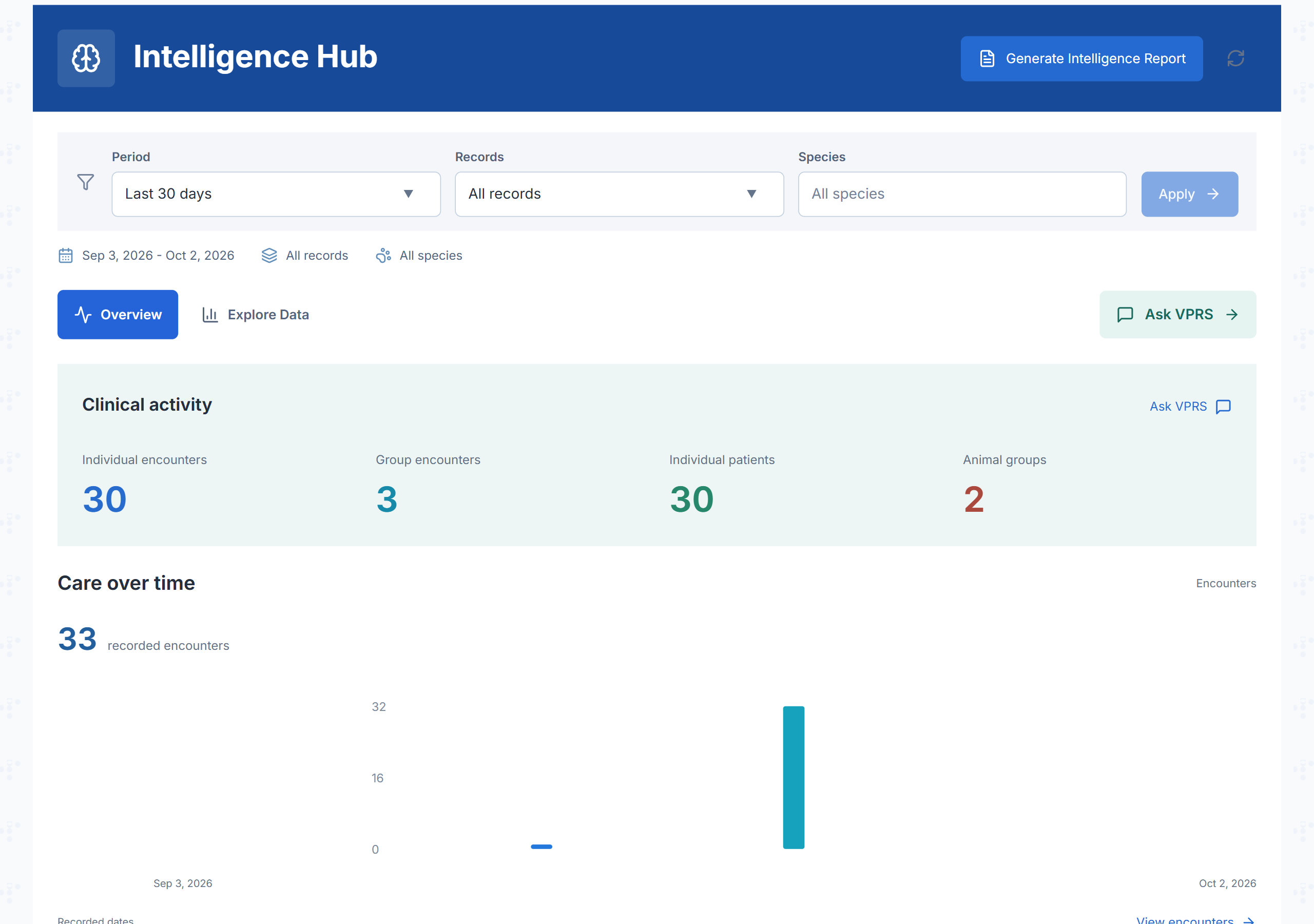
Surveillance, follow-up signals, and antimicrobial stewardship.
A paper file could be in one room, a test result on one phone, and the next visit in another note. The clinician might not see the full history when it matters.
Paper files can be misplaced, damaged, or left somewhere else when the patient returns.
Laboratory reports and images can remain outside the patient's clinical record.
Staff may repeat questions or depend on memory before care can continue.
Good care needs a complete, traceable history, not only the information that is easiest to find.
A patient keeps one identity while every authorised provider remains clearly named.
The patient keeps the same VPRS ID throughout life. An authorised clinic can find the patient and continue the existing history without creating another identity.
The VPRS Health Card carries the same identity wherever the patient receives care. A new clinic continues the record instead of starting again.
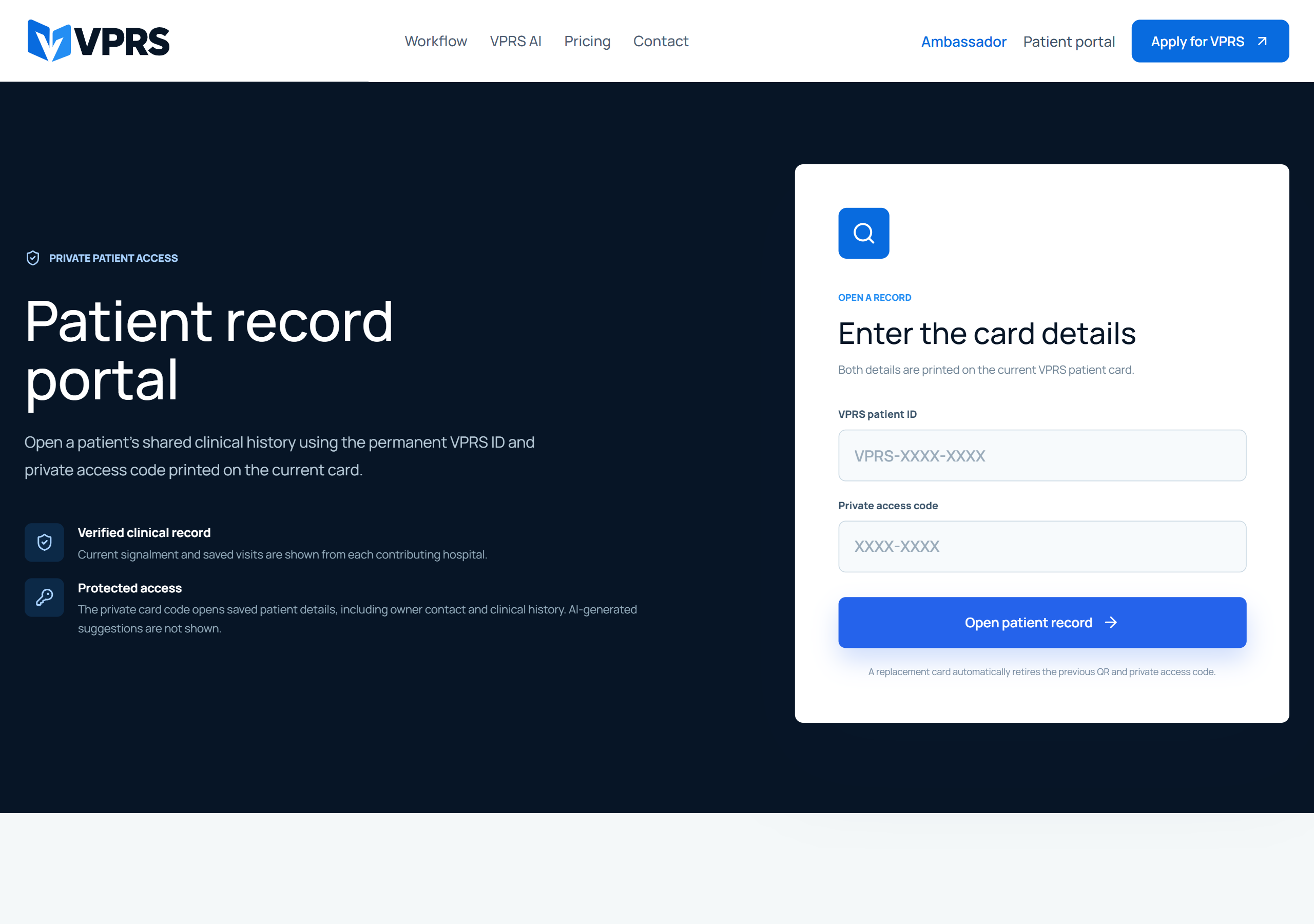
The permanent VPRS ID and private access code open the patient portal. Private clinic notes, billing, and owner contact details remain hidden.
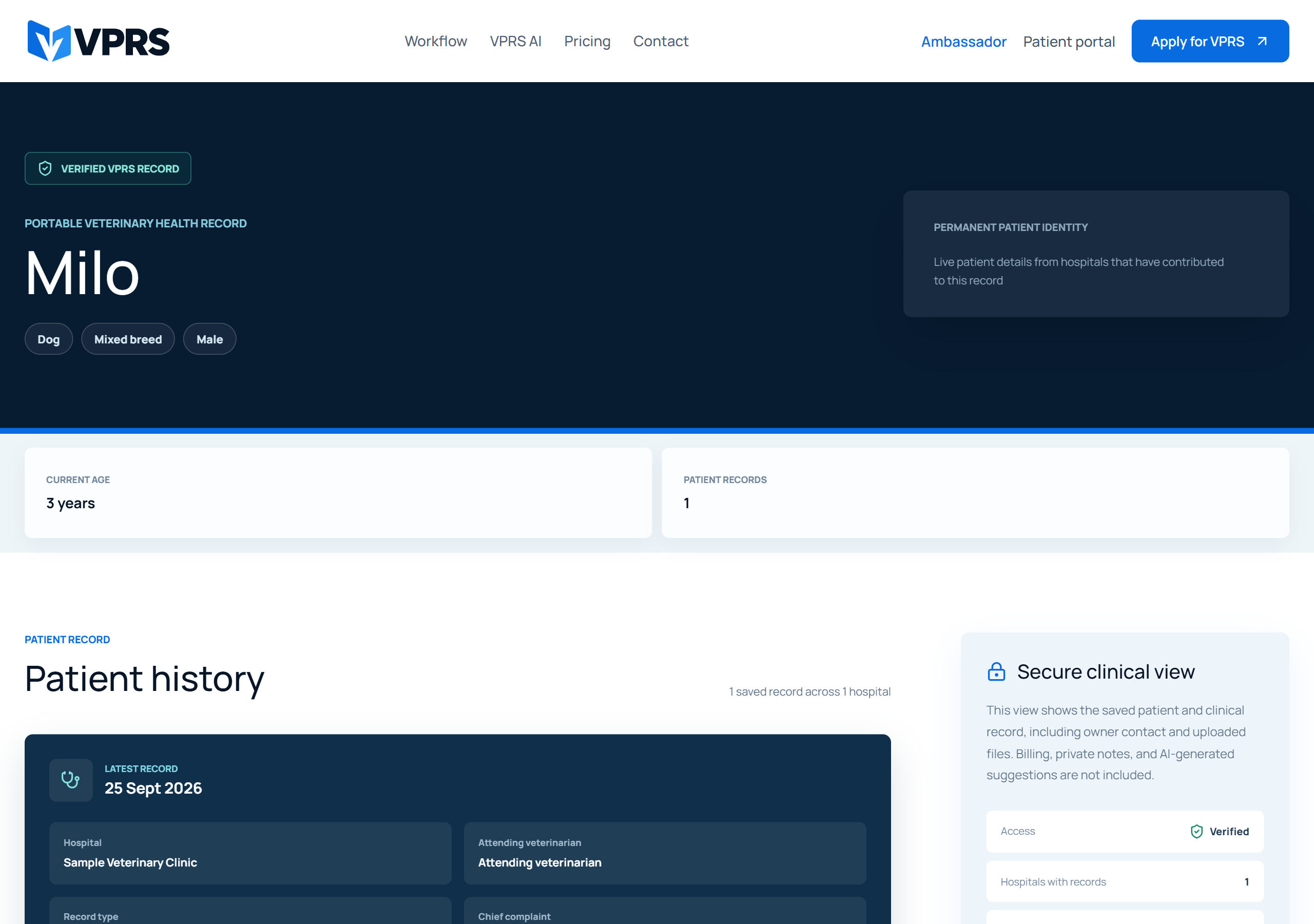
The owner sees the latest visit first and can open the history from each hospital. The patient keeps one identity while every provider remains clearly named.
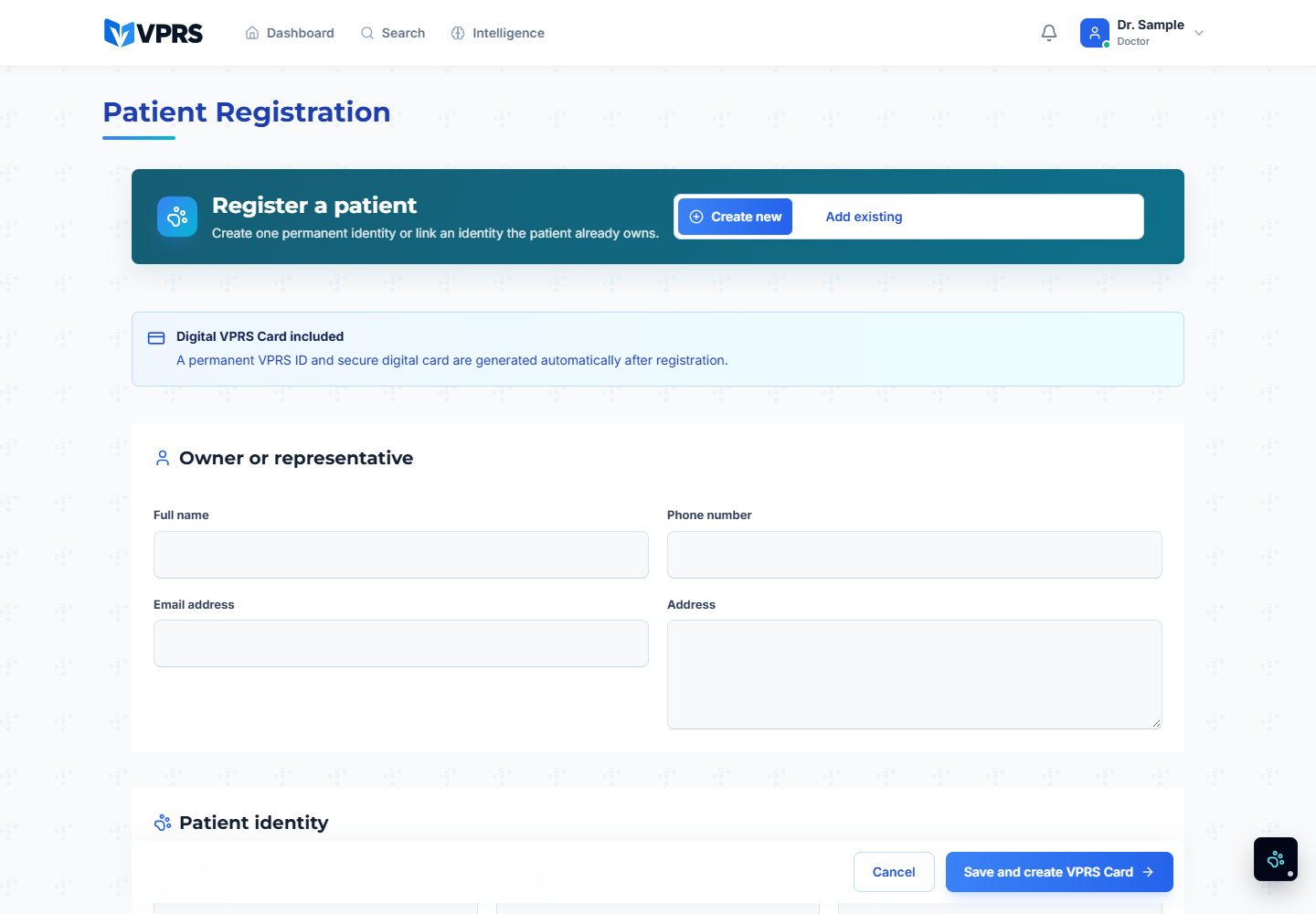
Follow one patient through the working VPRS interface, from registration to hospital intelligence.
Enter the patient and owner details once. VPRS creates a permanent patient ID and a digital VPRS Health Card.
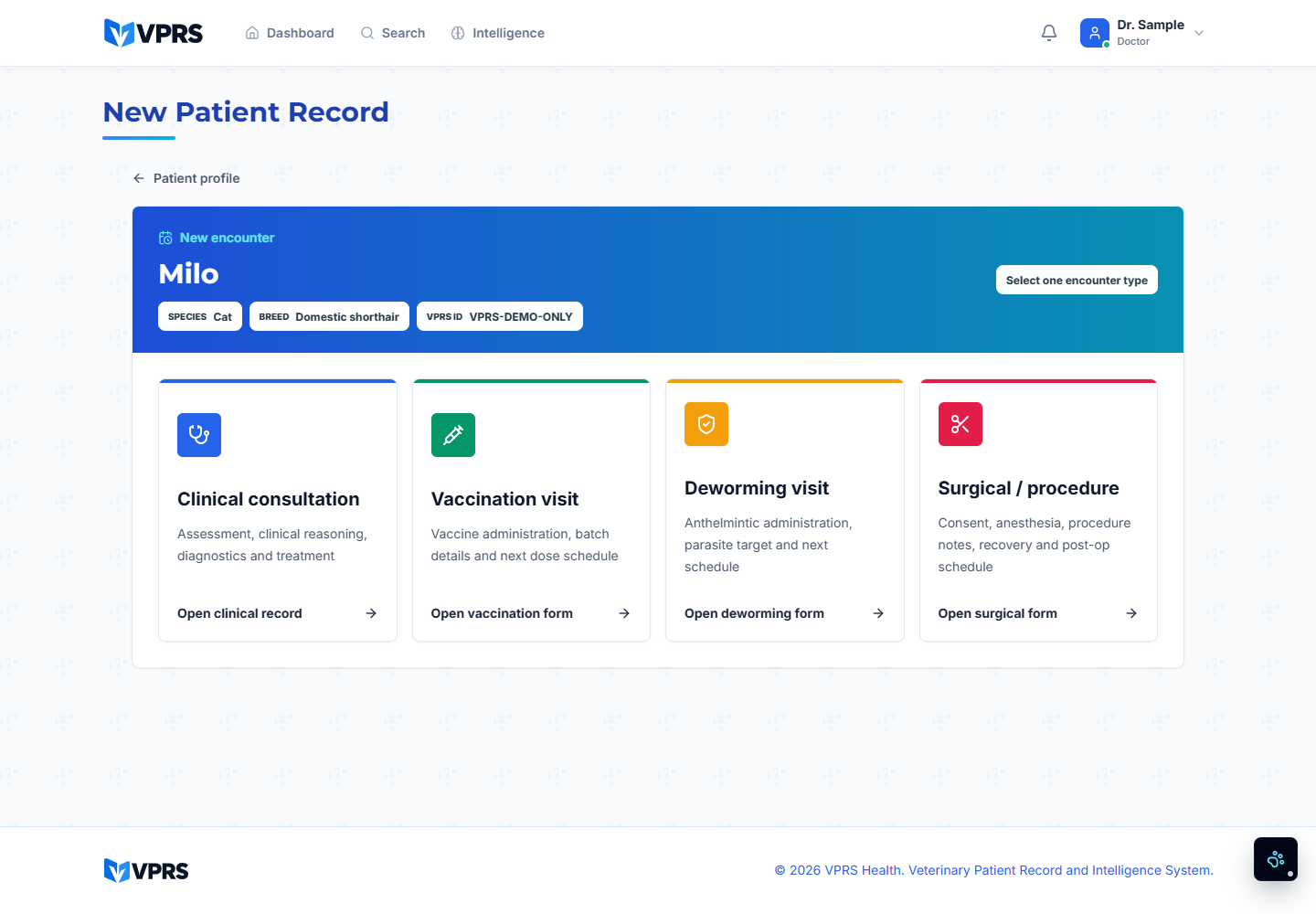
Choose clinical consultation, vaccination, deworming, or surgery. Each form collects the information and follow-up dates needed for that type of care.
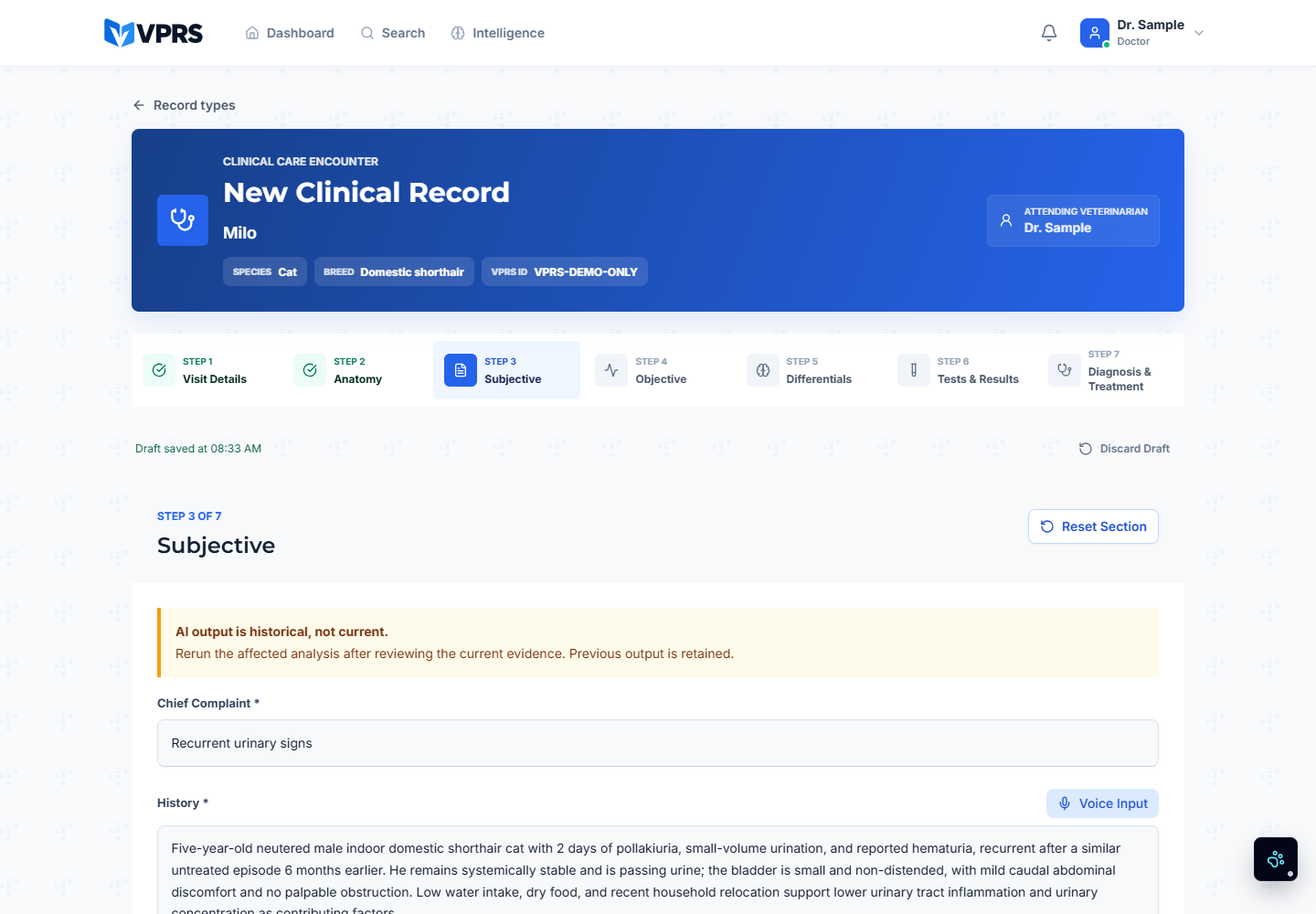
The clinical form keeps the examination, anatomy, notes, attachments, test results, diagnosis, treatment, and follow-up in one structured record.
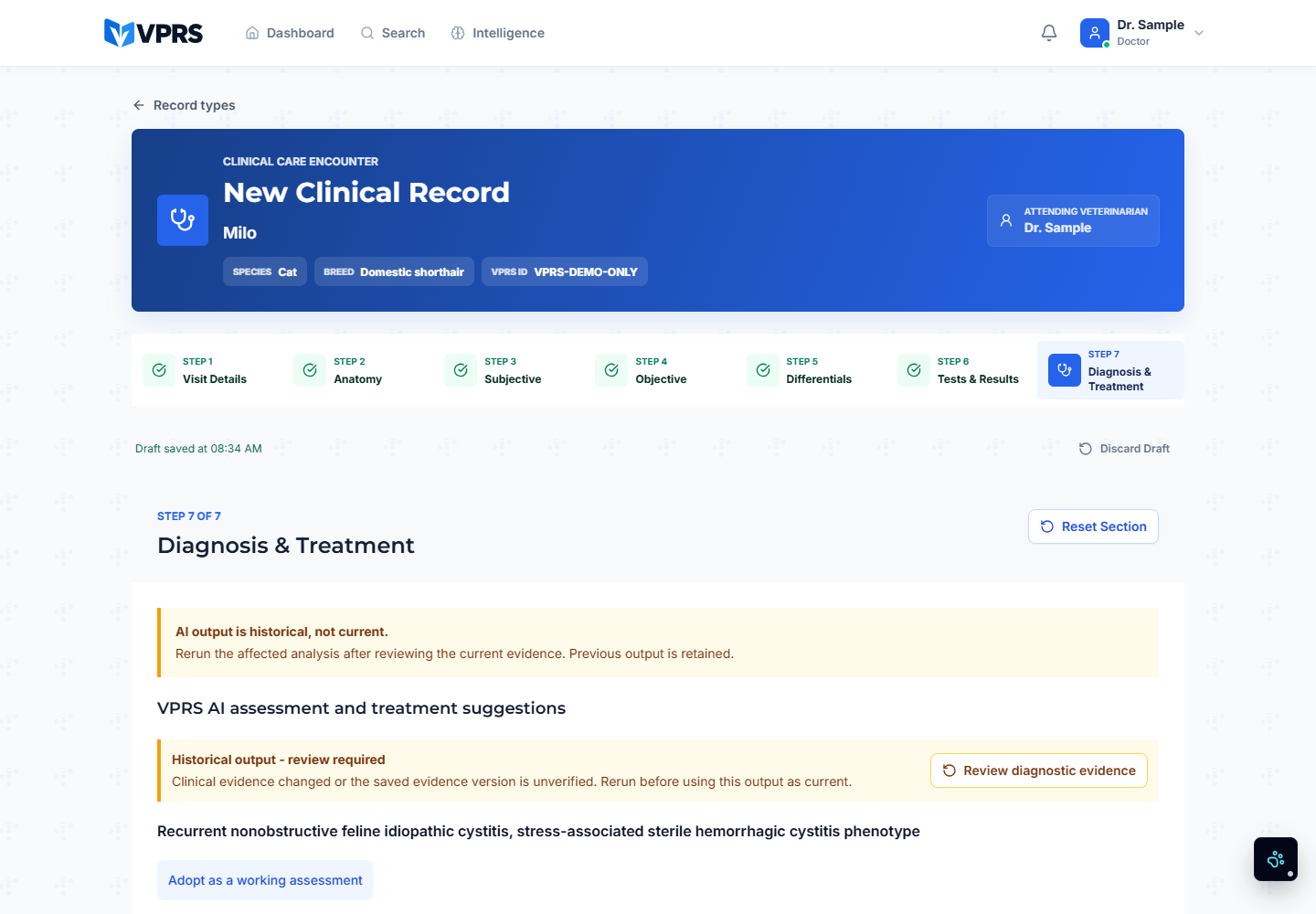
VPRS AI creates ranked differentials, suggests tests, reviews uploaded results, supports confirmatory reasoning, and provides treatment and drug-safety guidance.
Clinical care, vaccinations, deworming, surgery, signed consent forms, attachments, and appointments stay in date order inside one patient profile.
The VPRS Health Card and patient portal open selected clinical history while private clinic notes, billing, and owner contact details stay hidden.
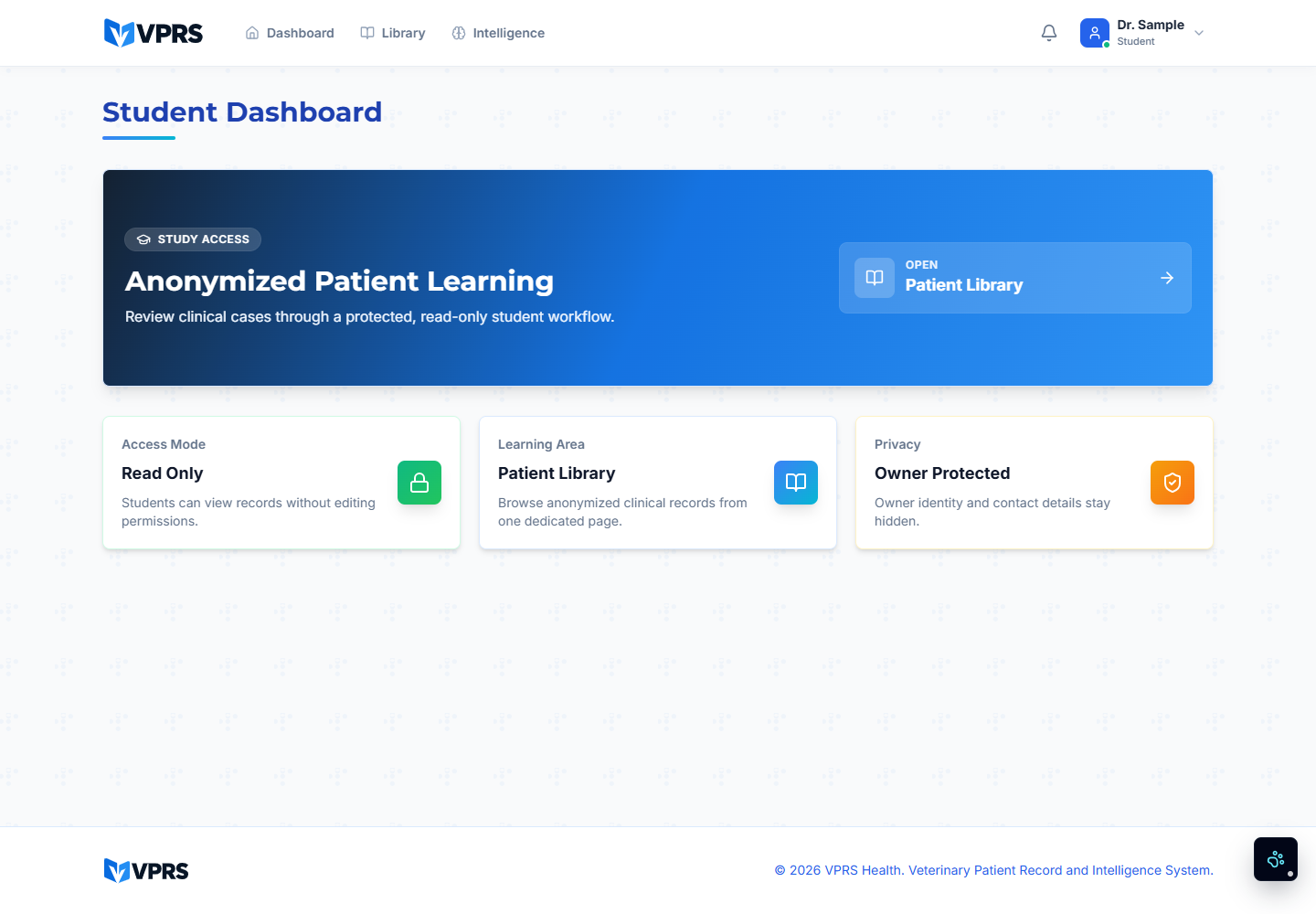
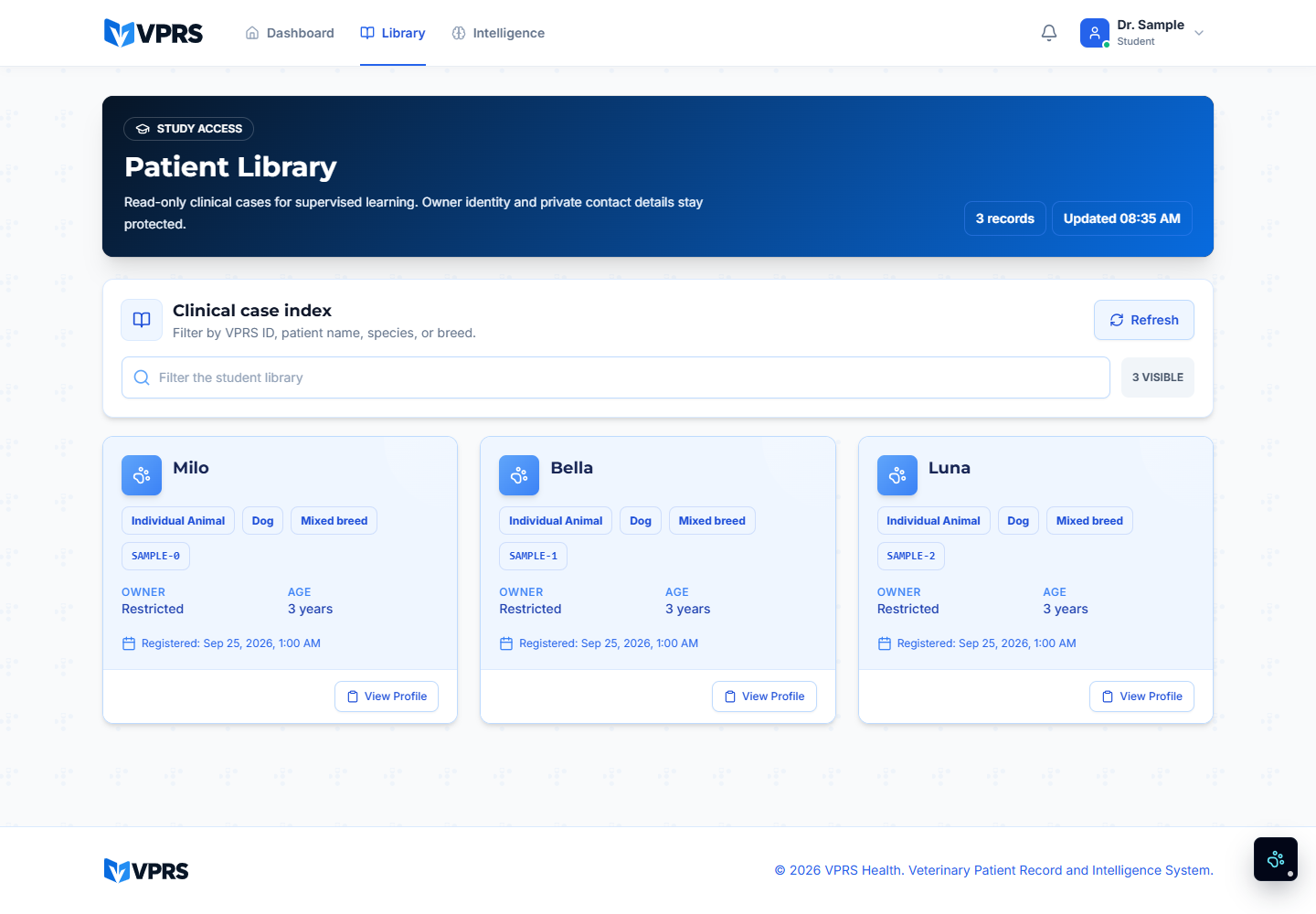
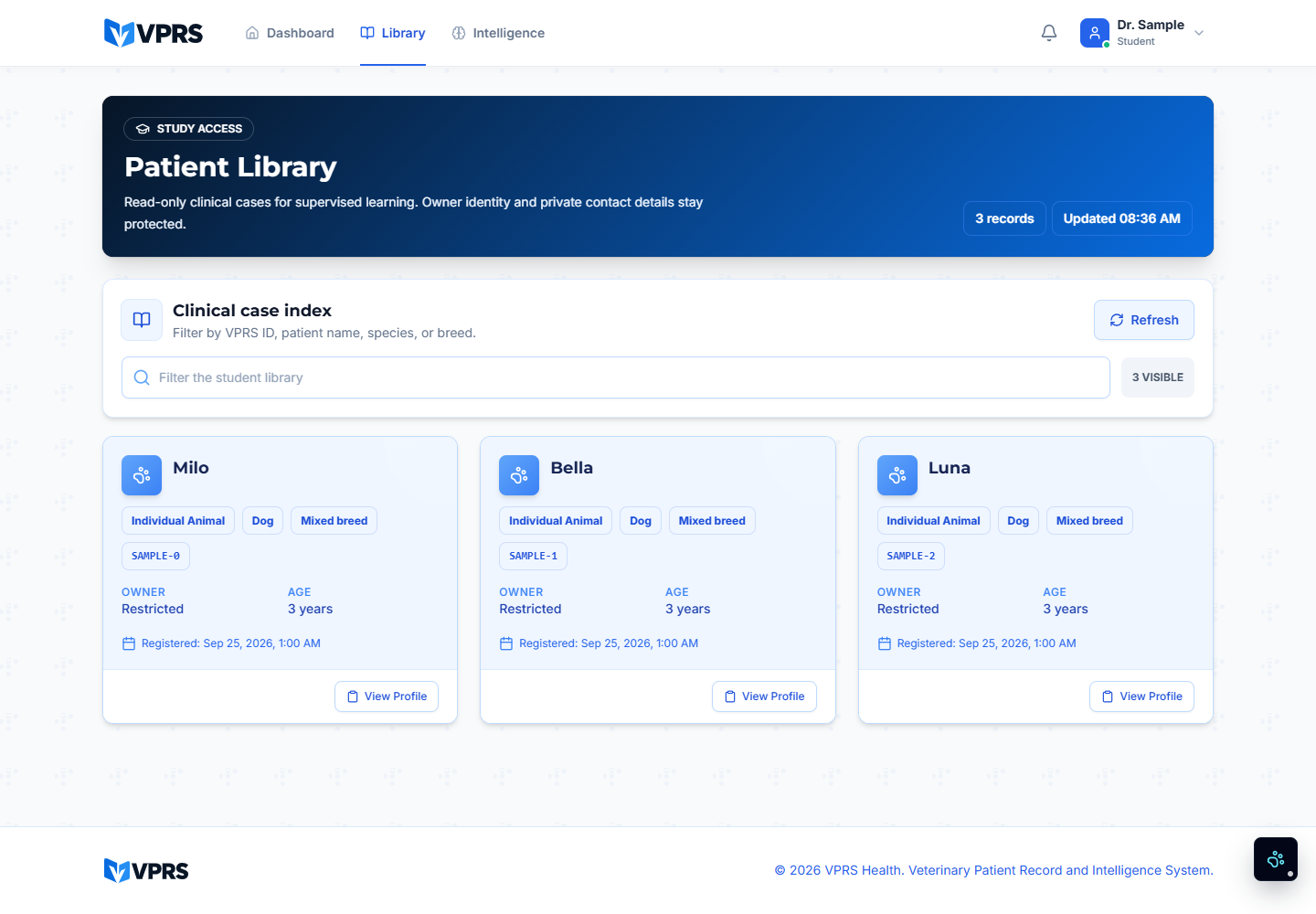
Students can review anonymised patient cases in read-only mode. They cannot edit records or use paid clinical AI tools.
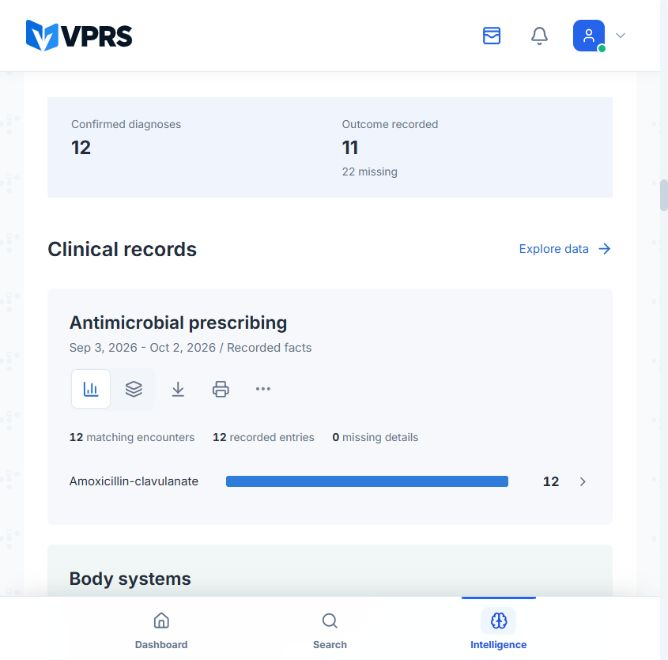
The Intelligence Hub shows disease patterns, follow-up needs, public-health alerts, and antimicrobial use so the clinic can act before a pattern is missed.
Clinical decision support from the first findings to the treatment plan, with the veterinarian making the final decision.
VPRS AI reviews the signalment, complaint, history, examination, and recorded anatomy. It returns a ranked differential list and explains the supporting and limiting findings.
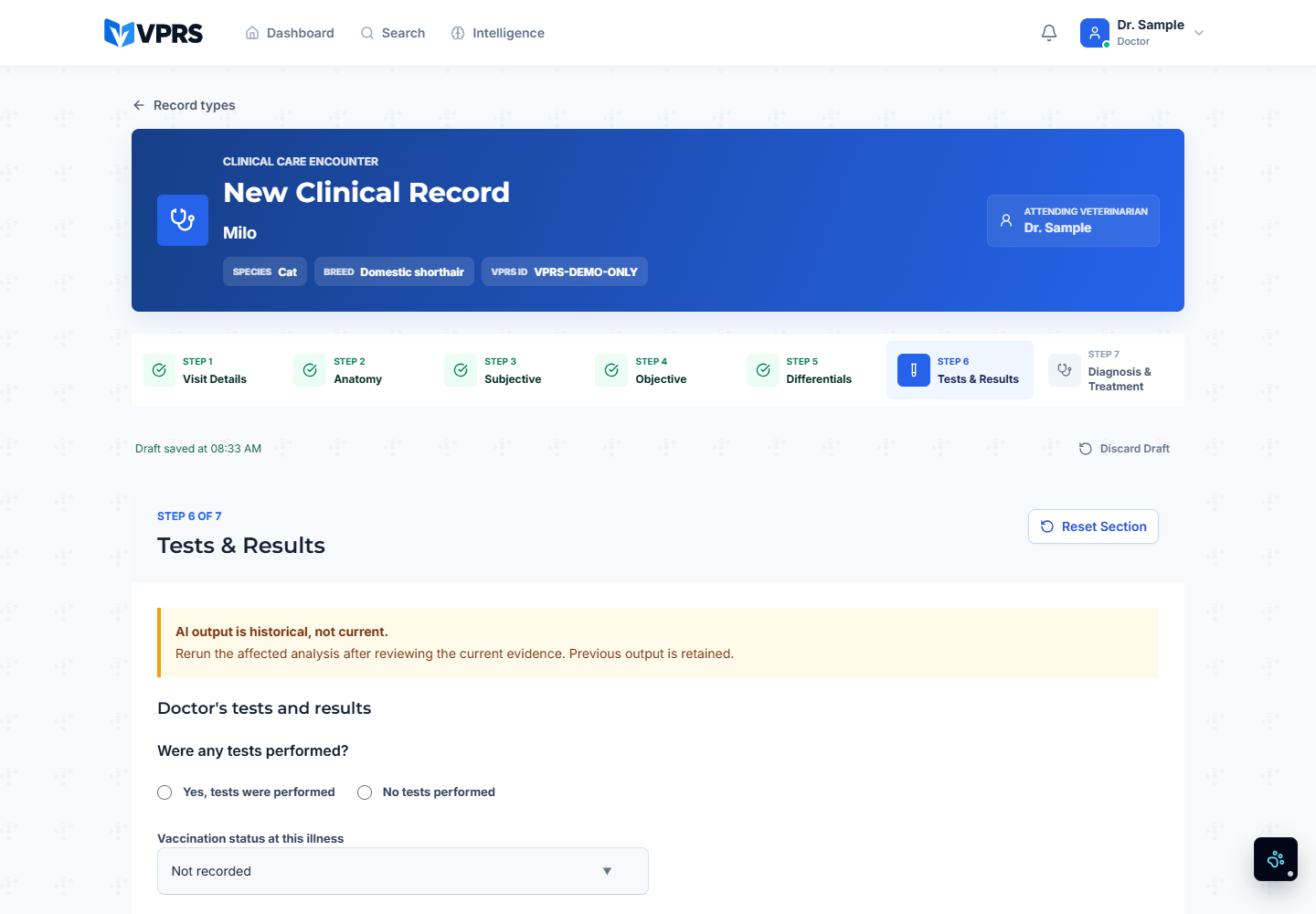
Useful diagnostic tests are presented in priority order, with a clear explanation of what each test can confirm, exclude, or clarify.
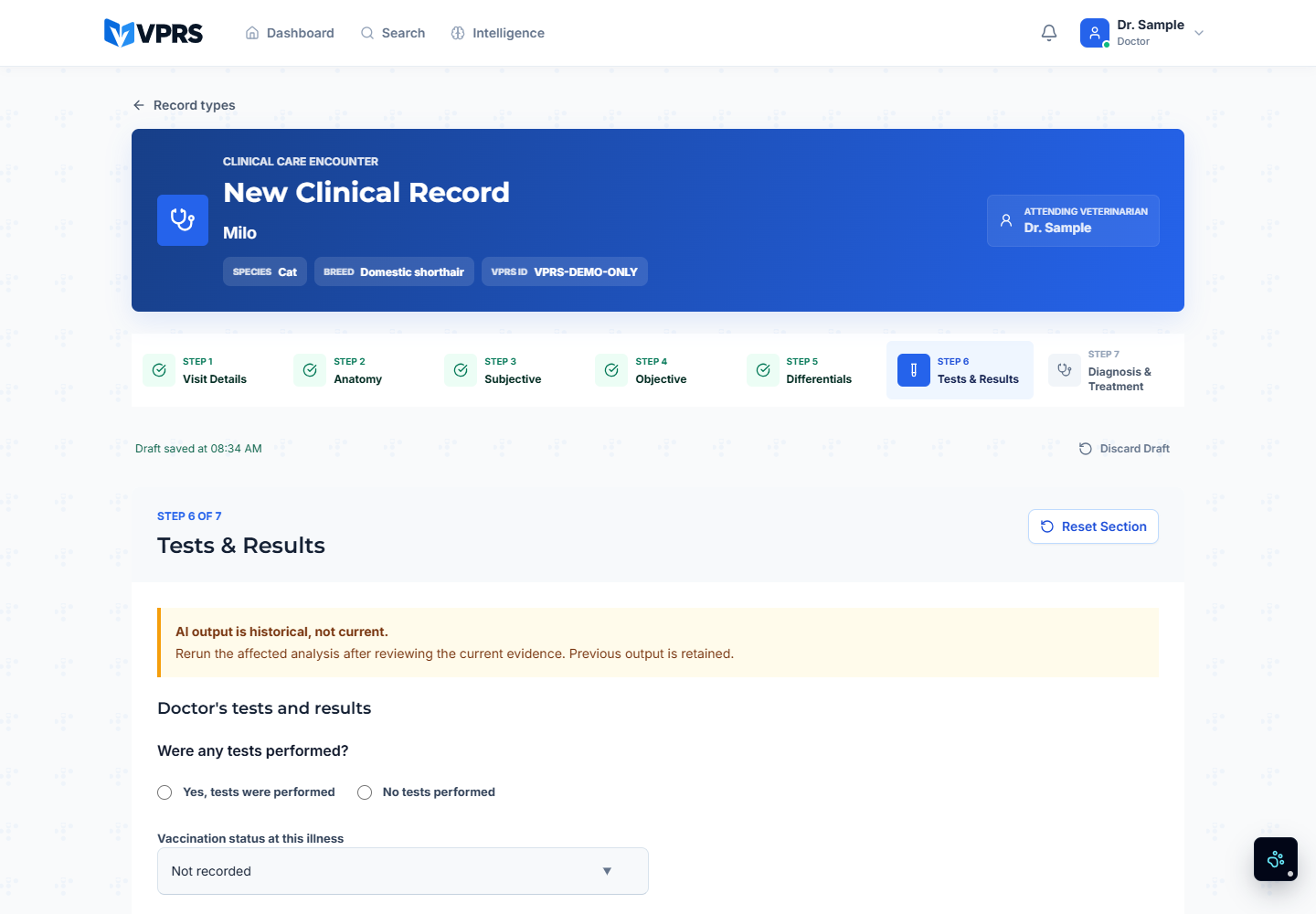
Laboratory reports, images, and written results stay inside the same visit. VPRS AI reviews the new evidence against the earlier clinical reasoning.
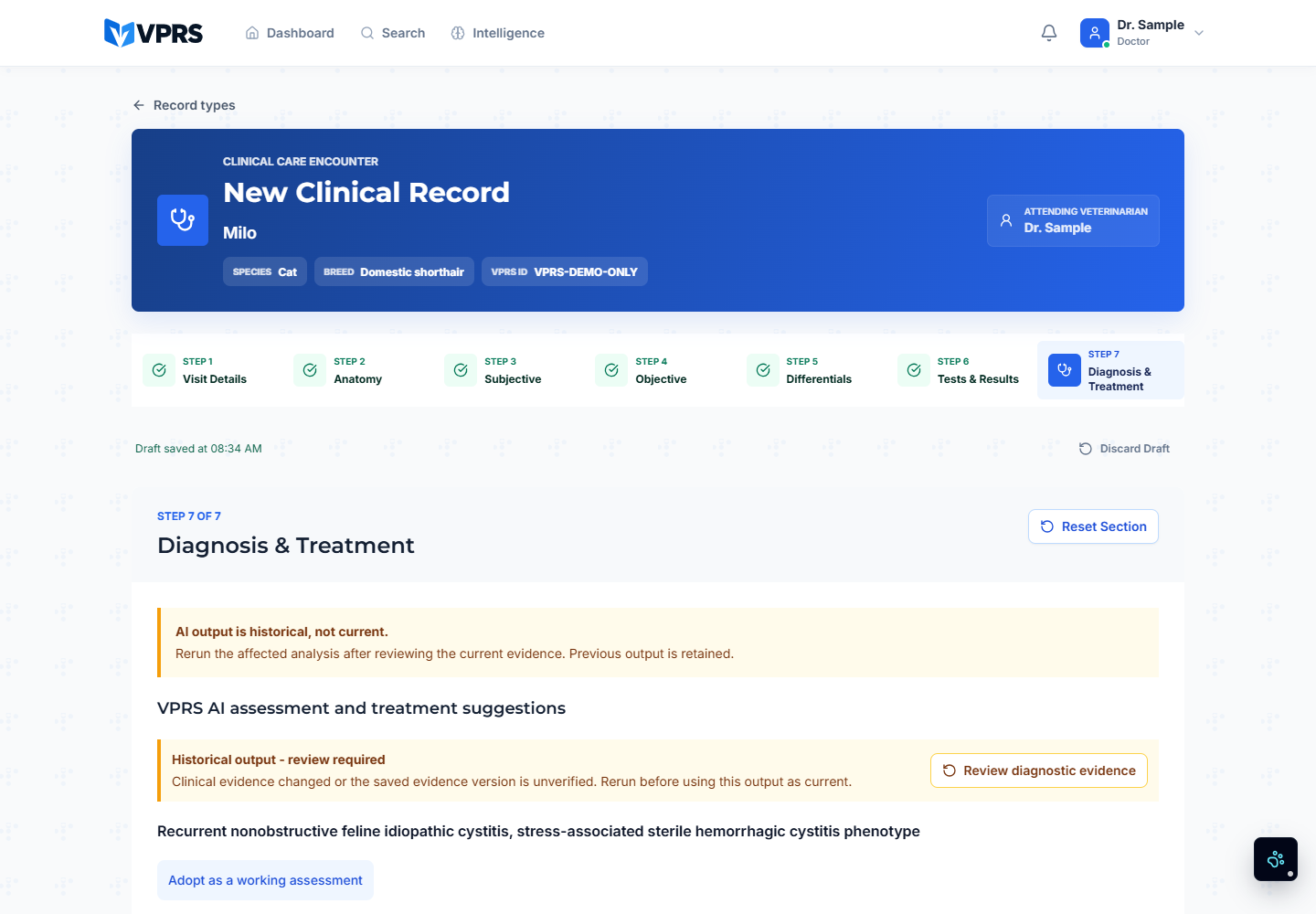
VPRS AI shows whether the results support the leading diagnosis, change the differential ranking, or reveal a new concern. The veterinarian makes the final decision.
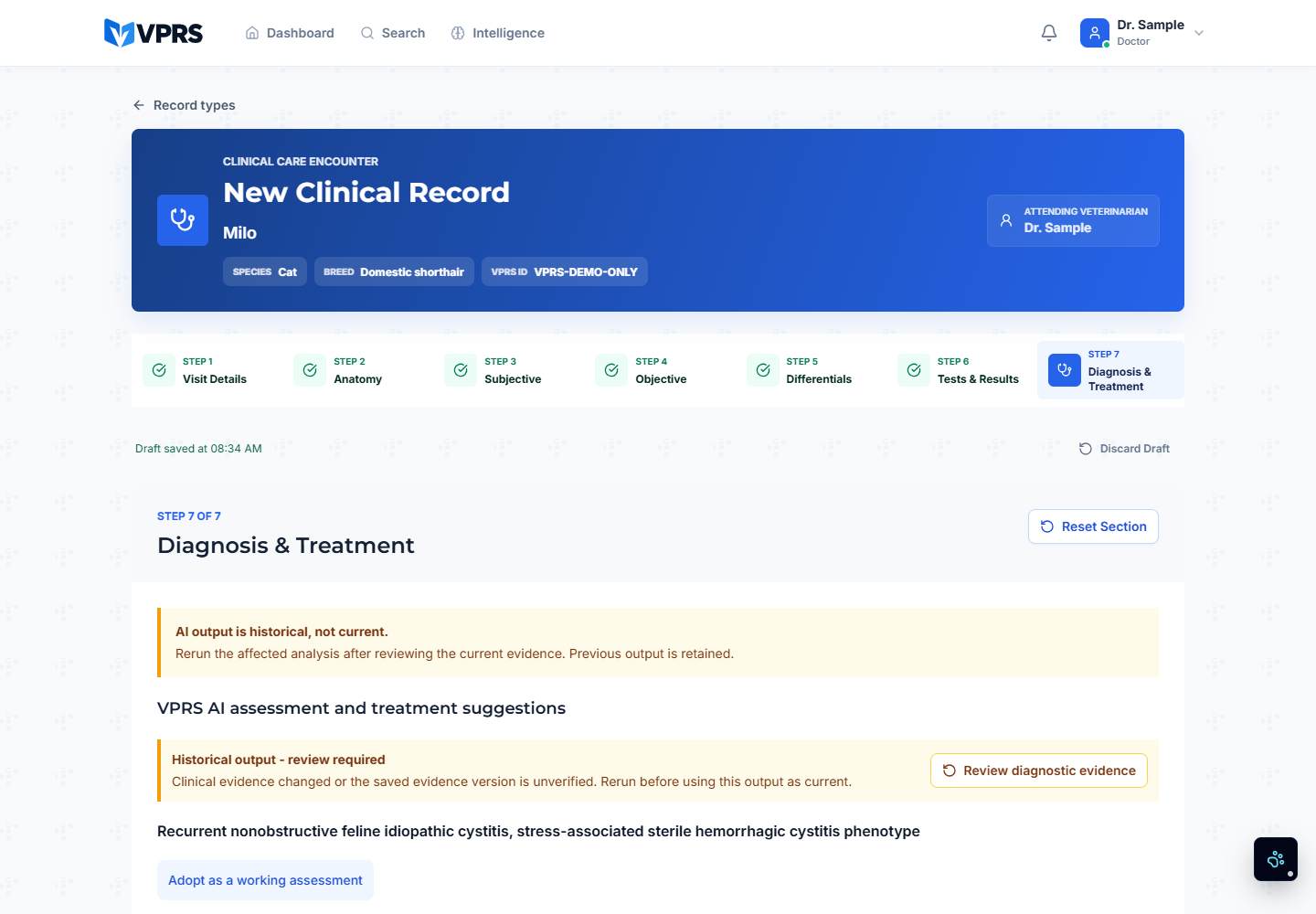
The system presents treatment goals, medication options, supported dose details, cautions, monitoring needs, and important safety checks for clinician review.
VPRS keeps each workflow clear while protecting information a user should not change or view.
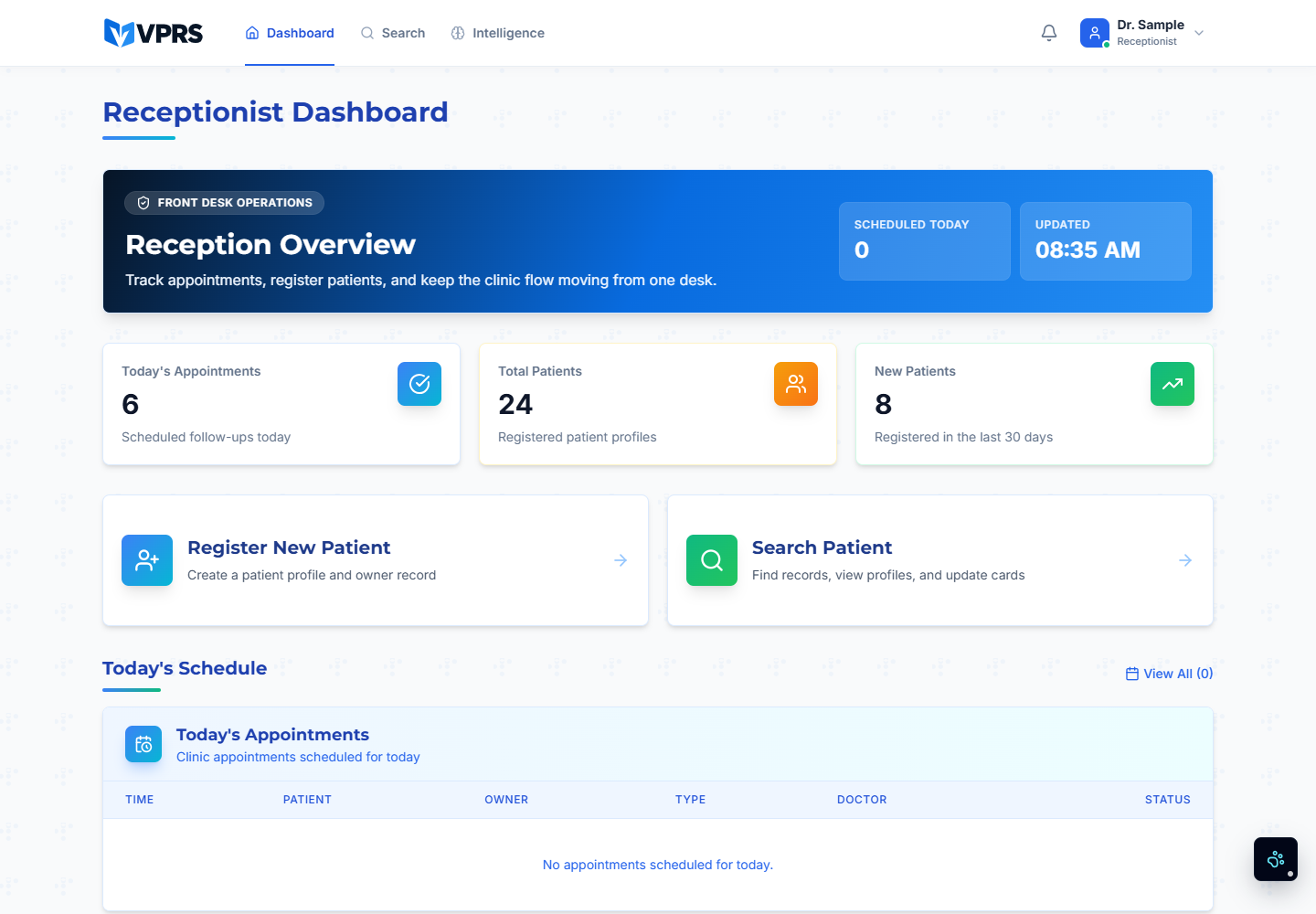
Register patients, find existing VPRS records, manage appointments, and follow the clinic queue without entering clinical decisions.
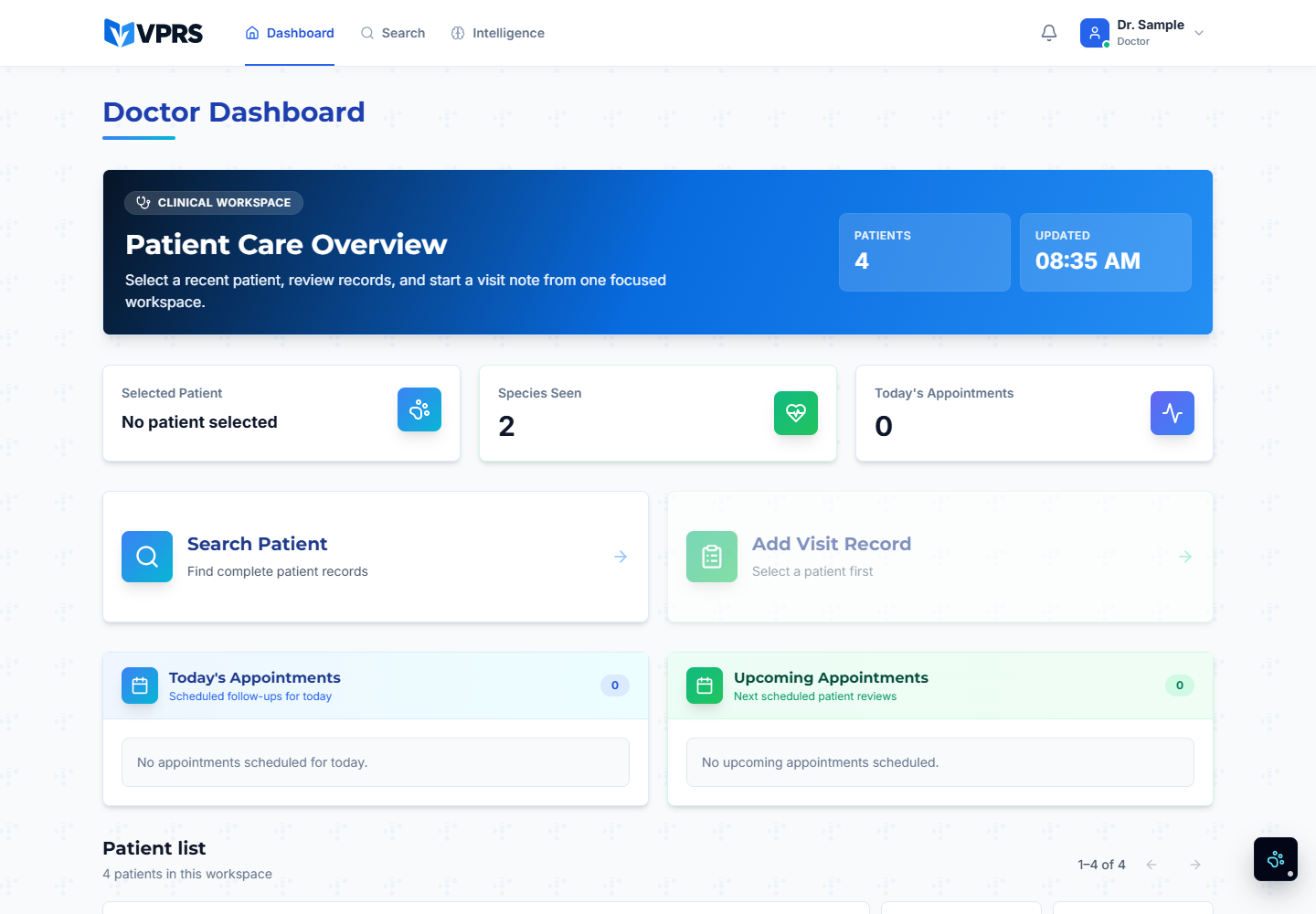
Review history, create every visit type, add clinical evidence, and use approved decision-support tools where needed.
Review anonymised patient cases in a protected, read-only library without editing tools or paid clinical AI.
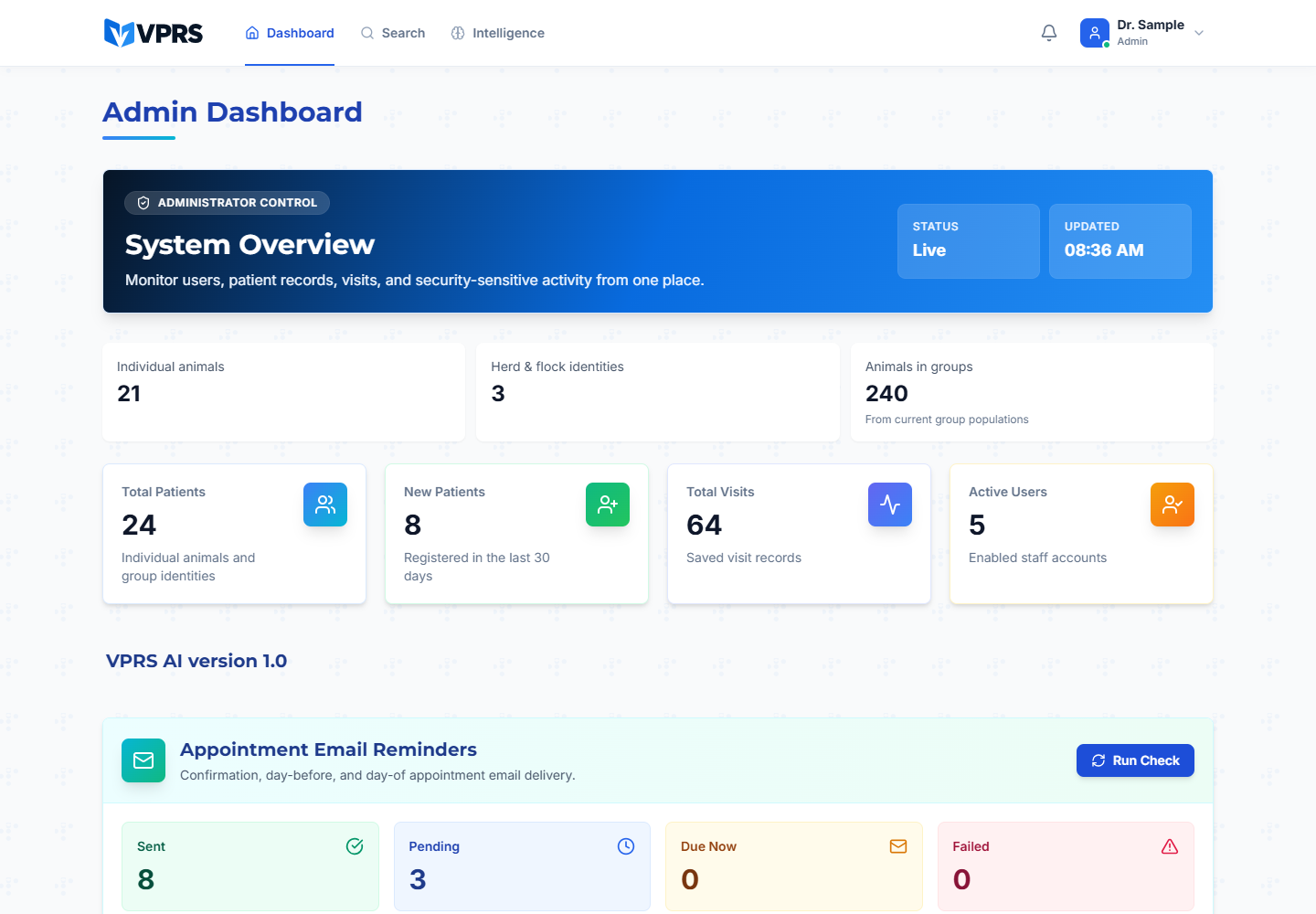
Manage staff, permissions, clinic settings, reports, subscriptions, and the use of paid AI services.
The Intelligence Hub turns clinic records into clear reports for disease trends, follow-up needs, public-health signals, and antimicrobial stewardship.
It does not change a prescription automatically. It presents signals and areas for the veterinarian to review.
See where VPRS fitsAdd staff, register patients, manage visits, and issue health cards in one system.
Apply for clinic accessSupport public facilities, coordinated reporting, disease monitoring, and responsible antimicrobial use.
Discuss deploymentGive each role the correct workspace while protecting patient records and clinical decisions.
Discuss institutional accessBring records, identity, clinical support, and hospital intelligence into one connected veterinary platform.